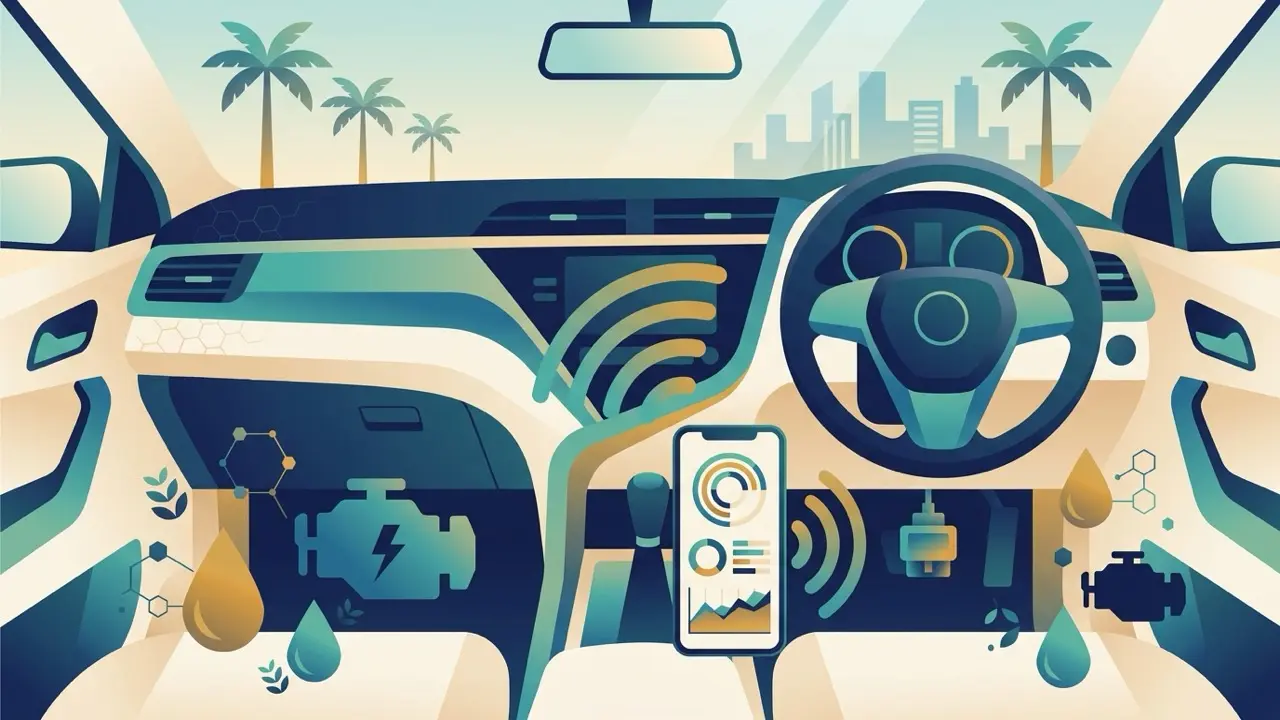
Check-engine light on, and the workshop says "we need to scan it first — RM 50"? A little device under RM 100 does the same scan — and more. A Bluetooth OBD2 scanner plugs into your car's diagnostic port and streams data straight to your phone: engine fault codes, real-time fuel consumption, engine temperature and more. This guide explains how it works, what to check before buying, and whether it's worth it.
What OBD2 Is and Which Cars Are Compatible
OBD2 (On-Board Diagnostics) is a standard port required on most petrol cars after 2001 and diesels after 2004. In Malaysia, nearly every Proton, Perodua, Honda, Toyota and import from the mid-2000s onwards has one — usually under the dashboard near the steering wheel. The scanner just plugs in; no wiring or modification.
What You Can Actually Do With It
Read and clear fault codes: know the real cause of a check-engine light before visiting the workshop — avoid being charged for problems that don't exist. Monitor real-time fuel consumption: see exactly how many litres/100km your acceleration habits burn. Live engine data: coolant temperature, battery voltage, RPM — catch problems early before they get expensive. Some apps even estimate the fuel cost of each trip.
1. Bluetooth vs WiFi — and the iPhone Catch
Most cheap scanners are built on the ELM327 chip in classic Bluetooth form, which only works with Android. iPhone users need a Bluetooth LE (4.0+) or WiFi version. Check the connection type before buying — this is the single most common purchase mistake.
2. Genuine Chips vs Too-Cheap Clones
Scanners under RM 15 often use old cloned ELM327 chips that don't support every protocol — some fail to read certain cars or keep dropping the connection. The RM 30–80 range from highly-rated sellers is far more dependable. Premium brands (RM 150+) offer their own polished apps, but they're not essential.
3. The App Makes the Experience
The scanner is just a data relay — the app decides what you see. Torque Pro (Android) and Car Scanner ELM (Android/iOS) are the most popular; both support live fuel-consumption dashboards and full fault-code reading. Make sure the scanner you buy is listed as compatible with your preferred app.
4. Features You Don't Need to Pay For
For personal use you don't need a several-hundred-ringgit "professional" scanner with its own screen — your phone is the screen. Advanced coding features (changing car settings) only matter for specific makes like VW/BMW and need different, specialised tools anyway.
How Much to Spend
RM 20–30: Works for basic code reading/clearing if you get lucky with a good clone. RM 30–80: The sweet spot for most people — stable chip, full protocol support, compatible with the popular apps. RM 150+: Branded units with their own app and customer support — for the smoothest experience.
4 Scanners Compared
Grouped by phone compatibility, because that's what most often causes a wasted purchase. Check your phone's platform before choosing.
In short: on Android and want the cheapest? The ELM327 Bluetooth. On iPhone? Take the Vgate iCar Pro BLE or the WiFi version. Want deeper diagnostics, or have a motorcycle too? The JFind JF700 Ultra.
Tools That Pair Well
To round out basic maintenance and safety:
Tip: after fixing an issue, clear the fault code and drive 50–100 km. If the same code returns, the problem isn't solved — powerful information to have when negotiating with a workshop.