
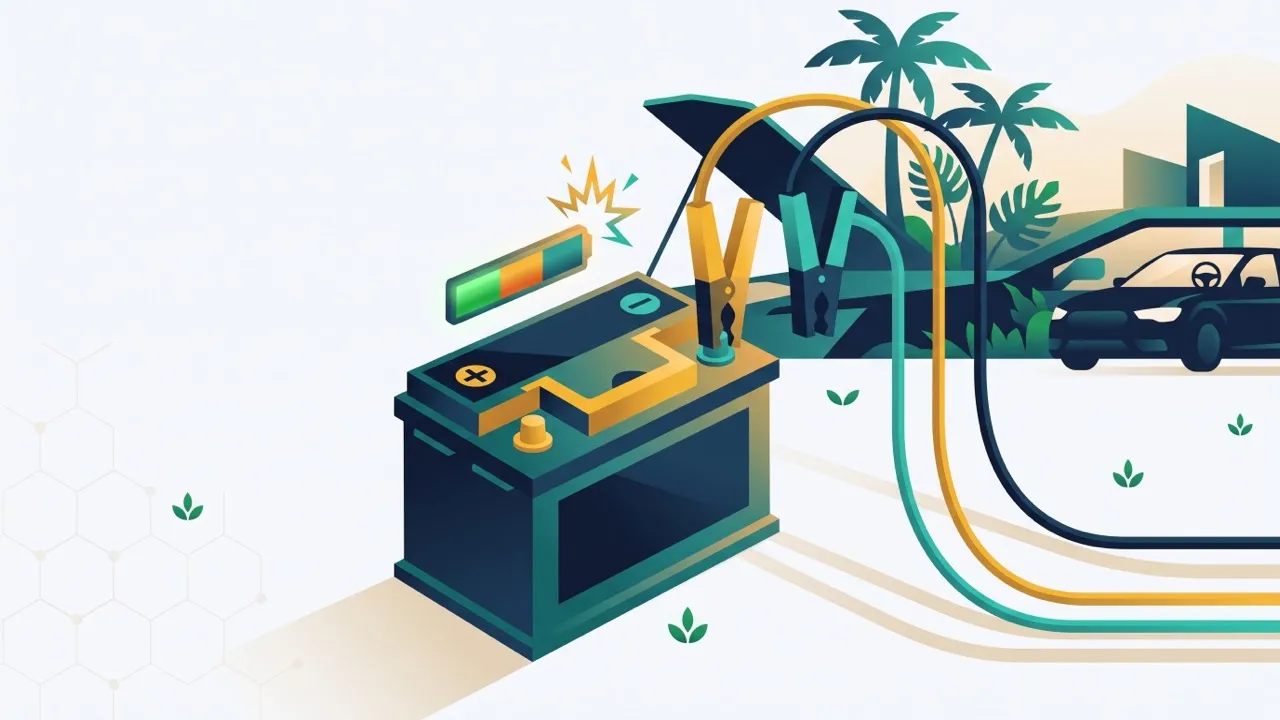
A car battery is the component nobody thinks about — until the morning the car just goes "click" and refuses to start. In Malaysia, year-round heat means a battery typically lasts only 2 to 4 years, considerably shorter than in temperate countries. This guide covers the warning signs, how to find the right size, the difference between battery types, and an important warning for Eco Idle cars.
1. Signs Your Battery Is Failing
Slow cranking when starting, especially on the first start of the morning — this is the earliest and most reliable sign.
Dimming lights while cranking. If the headlights or cabin lights visibly dim as you turn the key, the battery can no longer carry the load.
Repeated clicking with no start. Usually means there isn't enough power to turn the starter motor.
Needing a jump start more than once. Once might be bad luck; twice means the battery (or the alternator) has a real problem.
Age over 3 years. Even while still working, a battery past three years in Malaysia deserves watching — batteries rarely give much warning before they fail.
2. Why Batteries Die Faster in Malaysia
Many people assume cold kills batteries. In fact heat is far more damaging: high temperatures accelerate water loss and internal plate corrosion. Cold weather merely exposes a battery that is already weak.
Two other habits shorten battery life here: lots of short trips (the alternator never gets long enough to replace what starting used), and cars left parked for long periods (the alarm and ECU keep drawing a small current the whole time).
3. How to Find the Right Size
The simplest and most accurate method: read the label on your existing battery. You'll see a code like NS40, NS60, 55B24L or 65D26R. Buy the same size.
The letter at the end is critical. L and R indicate which side the positive terminal sits on. Order the wrong side and the battery cables won't reach the terminals — a correctly-sized battery that still cannot be fitted.
Photograph your old battery's label with your phone before buying. It takes five seconds and saves you an awkward return (batteries are heavy and expensive to ship back).
4. Battery Types: Wet, MF, EFB and AGM
Wet / conventional — cheapest, with removable caps. Needs topping up with distilled water periodically. Still sold, and worth it if you'll actually check it.
MF (Maintenance-Free) — fully sealed, no topping up. This is what most drivers choose today.
EFB (Enhanced Flooded Battery) — designed for start-stop cars, which switch the engine off and on dozens of times per journey. It withstands far more frequent charge-discharge cycles.
AGM — the highest specification, for vehicles with heavy electrical demands or more advanced start-stop systems. The most expensive.
5. Warning: Eco Idle / Start-Stop Cars
This is the most expensive mistake on this list. If your car has Eco Idle (Perodua) or any start-stop system, fitting an ordinary MF battery to save money will destroy that battery within months — it simply isn't built for the number of cycles a start-stop system puts it through.
Use EFB or AGM. It costs more upfront, but replacing an ordinary battery twice a year costs far more.
Battery Picks by Size
Grouped by fitment, because that's the first decision you have to get right. Confirm the size code and terminal position on your existing battery before ordering.
6. DIY or Installation Service?
An installation service is the easy option — batteries are heavy, and the fitter usually takes your old one away for recycling. Several of the listings above already include installation.
If doing it yourself: disconnect the negative terminal first, then the positive. When fitting, reverse it — positive first, negative last. Make sure no metal tool bridges both terminals at once. Note that disconnecting the battery can reset the radio and some vehicle settings.
Don't put the old battery in household rubbish. Lead-acid batteries are fully recyclable, and battery shops will normally take them back — often with a trade-in discount for the old one.
7. How to Make a Battery Last Longer
Drive long enough to recharge — an occasional 20-minute-plus run is far better than only five-minute trips every day. Switch off lights and audio before shutting the engine down. Keep the terminals free of the white-green corrosion crust, since corroded terminals can mimic a dead battery. If the car will sit for more than a couple of weeks, consider a maintenance charger.
Be Ready for the Failure
Batteries rarely die at a convenient moment. These help before and after:
Tip: keep a photo of your battery's label on your phone. When the time comes to replace it — usually without warning — you won't be guessing at sizes or opening the bonnet at the roadside.